What Surveys Are Required Before a Strip Out Project?
March 24, 2026
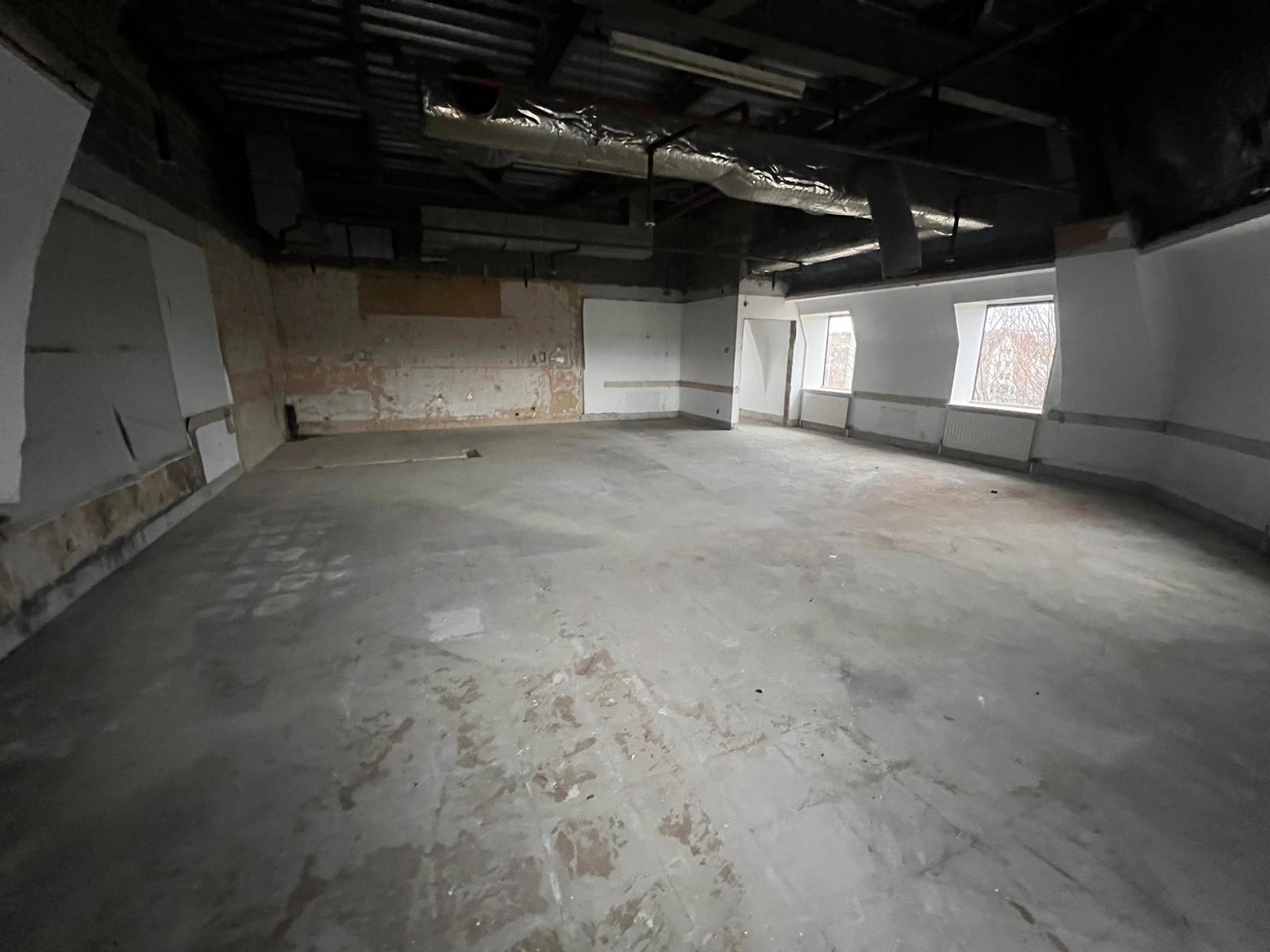
Skipping surveys before a strip out is one of the most common mistakes on commercial projects. It costs more time and money than the surveys ever would have. Here's what you actually need, why each one matters, and when you need it done before work starts.
Why surveys matter before strip out
A strip out looks straightforward. You're taking things out, not putting them in. But inside most commercial buildings — especially anything built before 2000 — there are materials and systems that can stop a job dead if you hit them unprepared.
Asbestos-containing materials. Live electrical circuits buried in walls. Structural elements disguised as partition framing. Load-bearing floors hidden under raised access panels. None of these are obvious from a walkthrough.
Surveys protect your project in three ways:
- They keep workers safe by identifying hazards before anyone picks up a tool.
- They keep the project legal — some surveys are a legal requirement, not optional.
- They prevent expensive surprises mid-project, when stopping work costs the most.
The surveys below aren't bureaucratic box-ticking. They're information you genuinely need.
1. Asbestos survey
Under the Control of Asbestos Regulations 2012, an asbestos survey is legally required before any demolition or refurbishment work on a non-domestic building. This isn't optional.
For strip out projects specifically, you need a Refurbishment and Demolition (R&D) survey — not a Management survey. There's an important difference.
Management survey vs R&D survey
A Management survey identifies asbestos in areas that are in normal use. It's what building managers use to track asbestos during day-to-day occupation. It won't look inside walls, under floors, or above suspended ceilings — exactly the areas you'll be working in during a strip out.
An R&D survey is intrusive. The surveyor cuts into walls, lifts floor tiles, opens ceiling voids, and samples materials throughout the building. It's designed to find asbestos in the areas that will actually be disturbed during the works.
Common places asbestos is found in commercial buildings:
- Ceiling tiles (especially older suspended systems)
- Floor tiles and adhesive beneath vinyl or carpet
- Pipe lagging and duct insulation
- Textured coatings (artex) on ceilings and walls
- Soffit boards and partition linings in older fit-outs
- Roof sheets (particularly on industrial units)
- Gaskets on heating equipment
Only a UKAS-accredited asbestos surveying company. Check the surveyor's accreditation before appointing them. The resulting report — the Asbestos Register — must be given to your contractor before any work starts.
If asbestos is found, it either needs to be removed by a licensed contractor before strip out begins, or a plan needs to be in place to work safely around it. Either way, you need to know about it before your strip out team walks in.
2. Structural survey
Not every strip out project needs a full structural engineer's report. But if you're removing walls, taking out mezzanine floors, stripping back to shell, or working in an older building, you need one.
The structural survey answers a simple but critical question: what's load-bearing and what isn't?
Partition walls don't always look different from structural walls. Beams get boxed in with plasterboard. Columns get hidden inside furniture enclosures. Strip out the wrong thing without knowing what it does, and you're looking at serious structural risk — and serious liability.
A structural survey will also flag:
- Floor loading capacity — particularly relevant if heavy equipment is being removed or the space is being repurposed
- Existing damage or movement in the structure
- Any temporary propping required before certain elements are removed
Your strip out contractor should be working from drawings that identify structural elements. If those drawings don't exist or are outdated, a structural survey fills that gap.
3. MEP services survey
MEP stands for Mechanical, Electrical, and Plumbing. On any commercial strip out, understanding what services are present — and where they run — is essential.
Electrical
Before any walls come down or ceilings come out, you need to know where the electrical circuits run. Hitting a live cable is not just a delay — it's a safety incident. An electrical survey identifies the location of distribution boards, sub-mains, and circuits that need isolating before work starts.
Some older buildings have circuits that aren't clearly labelled or documented. A survey catches this before it becomes a problem on site.
Mechanical and HVAC
Commercial buildings often have HVAC systems, fan coil units, and ductwork running through ceiling voids. Before stripping a ceiling, you need to know what's above it — what can be removed, what feeds other floors, and what needs decommissioning before it's touched.
Plumbing and drainage
Particularly relevant in buildings with kitchens, bathrooms, or wet areas. Knowing where drainage runs prevents accidental damage to live pipework or connections to shared stacks.
4. Other hazardous materials surveys
Asbestos gets most of the attention — rightly so — but it's not the only hazardous material found in commercial buildings.
Lead paint survey
Common in buildings constructed or refurbished before the 1980s. Sanding or cutting through lead paint generates hazardous dust. A survey identifies affected areas before any surface removal work.
Mould and biological hazards
Relevant in buildings that have suffered water ingress or been vacant for a period. Significant mould growth can present health risks during strip out and may require specialist remediation first.
Contaminated land (basement works)
If the strip out involves below-ground elements or the building has an industrial history, a ground contamination report may be needed before any excavation or breaking-out work.
Polychlorinated biphenyls (PCBs)
Found in older electrical equipment and some building materials. More relevant in industrial or heavy commercial settings. PCB-containing materials require specialist disposal.
Whether you need these surveys depends on the age of the building, its previous use, and what the strip out involves. A good contractor will flag any concerns during the initial site visit.
5. Building condition survey
This one is particularly important if you're a tenant carrying out strip out works at lease expiry — or a landlord taking back a space after a tenant has vacated.
A building condition survey (also called a dilapidations survey or schedule of condition) documents the state of the building before works start. It records existing damage, defects, and wear — with photographs and detailed notes.
Why does this matter?
- It protects tenants from being held liable for damage that already existed before their strip out works.
- It protects landlords and gives them a clear baseline if the tenant causes damage during strip out.
- It prevents disputes about what was there before versus what was damaged during the works.
If you're working in a multi-occupied building, a condition survey of common areas and adjacent units is also worth doing. Strip out work can transmit vibration and cause minor damage nearby — having a pre-works record protects everyone.
6. Planning and heritage checks
Most internal strip out work doesn't need planning permission. But there are exceptions worth checking before you start.
Listed buildings
If the building is listed, any works that affect its character — including internal strip out — may require Listed Building Consent. This applies even to internal works that would normally be permitted elsewhere. Get advice from a heritage consultant or planning consultant early. Carrying out works without consent on a listed building is a criminal offence.
Conservation areas
External works in conservation areas are subject to restriction, but internal strip out is usually unaffected unless the building is also listed.
Lease and landlord consent
Not a survey, but often missed. Most commercial leases require a tenant to obtain written landlord consent before carrying out strip out or alterations. Check the lease before instructing any contractor. Your solicitor or surveyor should be able to advise on this quickly.
CDM regulations
Under the Construction (Design and Management) Regulations 2015, most commercial strip out projects will need a Principal Designer and Principal Contractor appointed, and a Construction Phase Plan produced. If the project lasts more than 30 working days with more than 20 workers simultaneously, or exceeds 500 person-days, the project must be notified to the HSE. Your contractor should be familiar with CDM obligations, but check this early.
When to commission each survey
Surveys are only useful if they're done in the right order and at the right time. Here's how it typically works on a well-run project.
4–6 weeks before works start
Commission the asbestos R&D survey. This takes time — the surveyor needs access, sample analysis takes days, and if asbestos is found, you may need to appoint a licensed removal contractor. Leave enough time for this.
3–4 weeks before works start
Commission the structural survey and MEP services survey. These inform the method statement and H&S plan your contractor needs to produce before mobilising on site.
2–3 weeks before works start
Complete the building condition survey. This needs to be done before any strip out work starts, not during. Photographs must be timestamped and the document signed off by both parties if possible.
Before contractor is appointed
Confirm planning position, check for listed building consent requirements, and confirm landlord consent is in place. These shouldn't be left until the last minute.
Before day one on site
All survey reports should be in hand and issued to the contractor. The CDM Construction Phase Plan should be in place. Any asbestos removal should be complete and a clearance certificate issued.
Survey summary table
A quick reference for the most common strip out projects:
| Survey type | When required | Who carries it out | Status |
|---|---|---|---|
| Asbestos R&D survey | All commercial strip out projects | UKAS-accredited surveying company | Required |
| Structural survey | Wall removal, floor removal, shell & core works, older buildings | Structural engineer | Conditional |
| MEP services survey | All projects with ceilings, walls, or floor voids to be opened | M&E engineer or specialist surveyor | Recommended |
| Lead paint survey | Pre-1980s buildings with surface removal | Hazardous materials surveyor | Conditional |
| Building condition survey | Leasehold properties; multi-occupied buildings | Building surveyor | Recommended |
| Listed building check | Any listed building | Planning consultant or LPA | Conditional |
| Ground contamination | Below-ground works; sites with industrial history | Environmental consultant |
Conditional |
Recent Blogs
- The Complete Guide to Commercial Strip Out Projects in the UK
- Who Is Responsible If Something Goes Wrong During a Strip Out?
- Strip Out Costs: What Actually Drives the Price and Why Quotes Vary So Much
- CAT A vs CAT B: What They Mean and Why It Matters for Your Strip Out
- How Long Does a Strip Out Take?