Healthcare Strip Out: What's Different About Working in Hospitals and Clinical Buildings
May 8, 2026
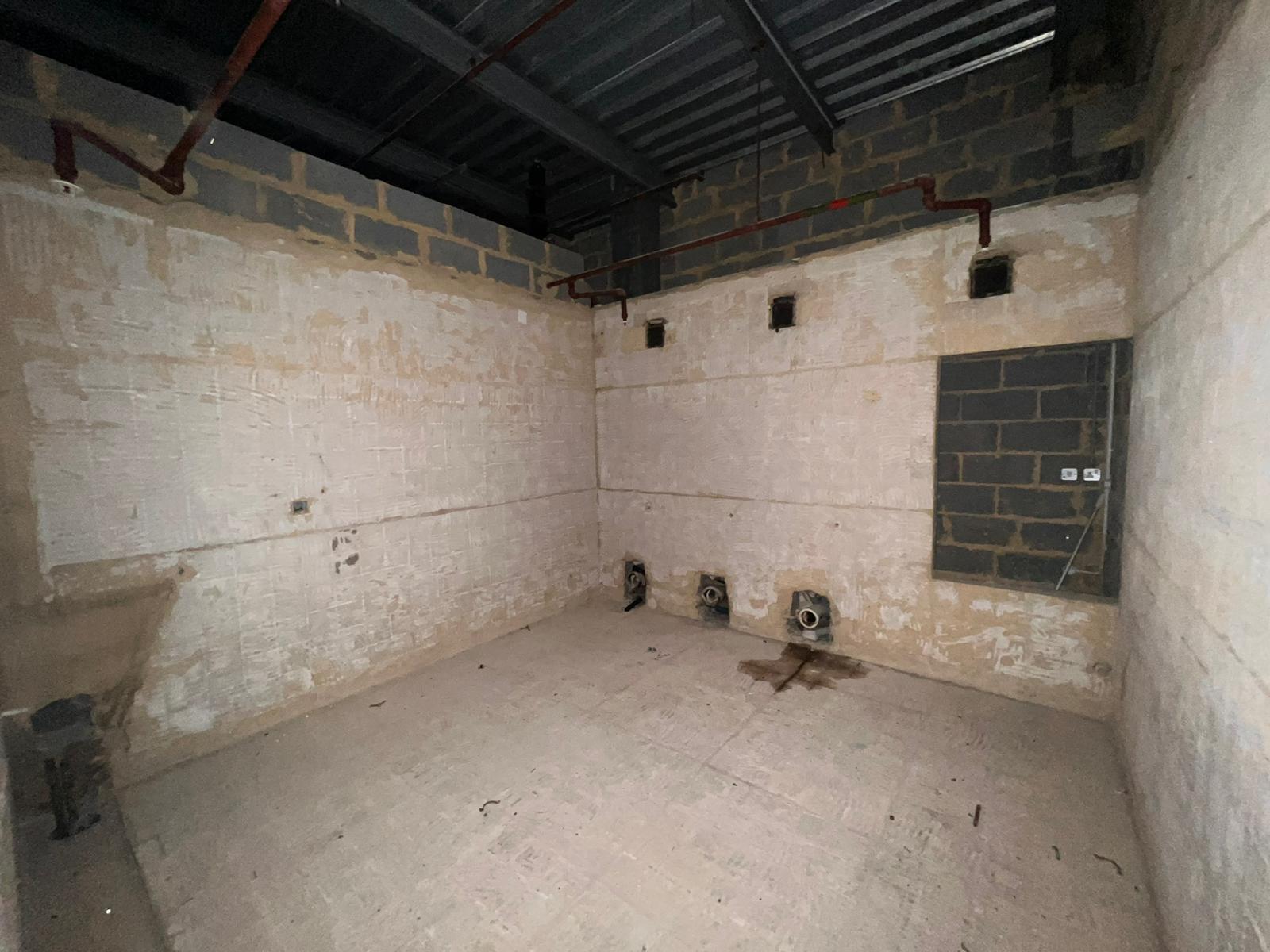
Why healthcare strip out is genuinely different
In a standard commercial strip out — an office, retail unit, or warehouse — the building is usually empty, or the work can be isolated from business operations with reasonable effort. The main concerns are asbestos, live services, access, and waste. Those still apply in healthcare, but they sit on top of a much more complex base.
Healthcare environments have patients in them. Sometimes critically ill patients. The consequences of getting something wrong — a dust cloud that reaches a ward, a water system disturbed without proper controls, a medical gas supply unexpectedly interrupted — are far more serious than in any other sector. That changes how every part of the project has to be planned and managed.
There are also specific regulatory frameworks that apply only to healthcare construction and refurbishment. The NHS publishes Health Building Notes (HBNs) and Health Technical Memoranda (HTMs) that set out exactly how works in clinical environments should be designed and managed. These aren't optional guidance documents — they're the standard that NHS estates teams, infection control teams, and commissioning bodies expect contractors to work to.
Infection Prevention and Control (IPC)
This is the single biggest difference between healthcare strip out and any other type of commercial project. Infection prevention and control isn't an afterthought in a hospital — it's a core operational function. And when construction or strip out works are happening, the IPC team has to be directly involved.
NHS guidance (HBN 00-09: Infection Control in the Built Environment) is clear: the IPC team must be consulted throughout every stage of a capital project. That includes strip out. From the initial scope and method statements through to completion and handover, the IPC team's requirements inform how the work is planned, sequenced, and controlled.
What this means on site
Before strip out begins in any area adjacent to patient care, a formal Infection Control Risk Assessment has to be carried out. This categorises the work by type and the patient risk level of the surrounding areas, and determines what protective measures are required.
In practice, this typically means:
- Sealed temporary partitions between the work area and any clinical or patient space — not just hoarding, but genuinely sealed barriers that stop dust and airborne particles migrating into clean areas.
- Negative pressure air machines within the work zone, drawing air inward and filtering it through HEPA units before exhaust. This prevents dust from the strip out being pushed into adjacent areas.
- Dedicated contractor access routes that are physically separated from patient and clinical routes, including for waste removal.
- Controlled entry and exit from the work zone — workers clean down before leaving the work area, and waste is removed via routes that don't cross clinical areas.
- Enhanced dust suppression during any cutting, breaking, or removal of materials that could generate airborne particles.
The IPC requirement also means that any change in scope, sequencing, or access route during the project has to be reviewed with the IPC team before it happens. You can't just adapt on the fly the way you might on a standard commercial site.
Working in a live healthcare environment
The most straightforward difference between a hospital strip out and most other sectors: you are almost never working in an empty building. Hospitals don't close. GP surgeries run appointment lists six days a week. Care homes have residents 365 days a year.
This fundamentally changes how the project has to be phased and managed. It's not about inconvenience — it's about patient safety and continuity of clinical services.
Phased decanting
In most healthcare strip out projects, services have to be decanted — temporarily relocated to other parts of the building — before the strip out of a given area can begin. This takes planning and coordination with the clinical team, not just the estates team. You need to understand which services are in the area to be stripped, where they can move to, and what clinical dependencies might be affected.
A phased programme has to be developed and agreed before any work starts on site. It needs to show clearly which areas are being stripped in which sequence, how clinical services move around those phases, and what the trigger points are for moving from one phase to the next.
Out-of-hours working
For work that generates noise, vibration, or significant dust — which covers most of the actual strip out activity — out-of-hours working is usually required in areas adjacent to patients. In a busy hospital, "out of hours" might mean evenings, nights, and weekends. In a GP surgery, it might mean a short window early in the morning before the first appointment.
Out-of-hours working in a healthcare environment also means:
- Coordinated access via security or the on-call facilities team
- Clear method statements for what is and isn't permitted during each shift
- Defined escalation paths if something unexpected is found — who to call, when to stop work, what to do in the interim
- Robust handover between day and night teams to ensure nothing is left in an unsafe state at shift change
Protecting patient areas at all times
Even during out-of-hours working, some areas of the hospital remain occupied. Emergency departments don't close. ICU runs 24 hours. Residential care settings always have residents in situ. The programme and method statements have to account for this at all times, not just during standard hours.
Medical gas systems
Medical gas pipelines — oxygen, nitrous oxide, medical air, vacuum systems — run throughout hospital buildings. They're often found in walls and ceiling voids that look identical to standard M&E services until you open them up. This is one of the most significant technical differences between healthcare strip out and standard commercial M&E strip out.
Medical gas pipelines are life-safety systems. They cannot be disturbed, damaged, or interrupted without very specific planning, controls, and in most cases, the involvement of a specialist medical gas engineer.
Before any ceiling or wall comes down
A medical gas survey is required before strip out begins in any area where medical gas pipelines may be present. This identifies the location of pipelines, isolation valves, outlet points, and zone valve boxes. Critically, it maps which systems serve which areas of the hospital — because a pipeline running through a ward corridor might be supplying oxygen to patients two floors away.
Any pipeline that passes through the area to be stripped needs to be:
- Identified and clearly marked before works start
- Isolated at the appropriate zone valve if it's being decommissioned
- Verified as isolated — pressure-tested to confirm it's safe before anyone works near it
- Capped at both ends to prevent contamination if the line is being removed
Who can do this work
Medical gas pipeline work must be carried out by a Competent Person in Medical Gas Pipeline Systems — someone who holds the relevant qualification under HTM 02-01 (the NHS technical memorandum governing medical gas systems). This is not standard M&E competence. Your strip out contractor either needs this qualification in-house or needs to have a named specialist subcontractor appointed before works start.
Ventilation systems — the hidden complexity
Healthcare ventilation systems are not standard commercial HVAC. Different areas of a hospital operate under different ventilation regimes — positive pressure in some clinical areas (to keep contaminants out), negative pressure in others (to prevent contaminants escaping), and carefully controlled air change rates and filtration levels throughout. These systems exist to protect patients and staff from airborne infection, and they have to keep working correctly throughout the strip out.
What can go wrong
When ductwork, ceiling voids, or plant rooms are disturbed during strip out, several things can happen that affect ventilation integrity:
- Dust and debris can enter ductwork and be distributed through the ventilation system into patient areas
- Alterations to ductwork — even temporary ones — can change pressure differentials between areas
- Removing ceiling tiles or void access panels can short-circuit ventilation systems and allow unfiltered air movement between areas
- Decommissioning extract fans or air handling units can affect the negative pressure of adjacent isolation rooms
The recommissioning requirement
This is something many strip out contractors miss. If ventilation systems in or adjacent to the work area are affected — even temporarily — they need to be formally recommissioned and validated before the area is returned to clinical use. You can't just reconnect ductwork and assume it's working correctly. Air pressure testing and microbiological air sampling may be required before sign-off, particularly in clinical areas with immunocompromised patients.
This should be agreed as part of the project scope before works start, not discovered as an issue when the strip out is complete and handover is being planned.
Legionella and water system risks
Legionella bacteria in water systems are a risk in any building, but the consequences in a healthcare setting are far more serious. Hospitalised patients — particularly elderly, immunocompromised, or post-operative patients — are in the highest risk group for Legionnaires' disease. An outbreak in a hospital is a potential major incident.
Strip out work creates specific Legionella risks because of what happens to water pipework when it's disturbed, capped, or left dormant:
- Dead legs — sections of pipework that are isolated or capped but not removed create stagnant water conditions. Stagnant water sitting at the right temperature is the ideal environment for Legionella growth.
- Disturbance of biofilm — stripping out can disturb existing biofilm in pipework and release bacteria into the wider water system.
- Loss of thermal control — if hot or cold water systems are interrupted during strip out, temperatures can drift into the range where Legionella multiplies.
What needs to happen
Under HTM 04-01 (the NHS guidance on water systems), a Legionella risk assessment is required before any significant work on water systems, and again after works are complete. Any dead legs created during the strip out need to be removed or flushed regularly until they're properly dealt with. Water samples may be required before the area is returned to use.
The hospital's Water Safety Group — which every NHS trust is required to have — should be notified of and involved in any works affecting water systems. For private healthcare facilities, the equivalent duty lies with the building owner or operator.
Asbestos in the NHS estate
A significant proportion of the NHS built estate dates from the 1950s to 1980s — the period of peak asbestos use in UK construction. Asbestos is common in NHS buildings, and its presence in a hospital strip out carries higher stakes than in most other settings, for two reasons.
First, the scale and complexity of NHS buildings means asbestos is often found in locations that aren't obvious — inside specialist ventilation ducting, in the construction of laboratory benches, in fire-resistant materials around medical equipment, and in areas that have been repeatedly modified over decades of use. A standard Management Survey may not have captured everything that will be encountered during strip out work.
Second, the people nearby are already unwell. An asbestos release in a clinical environment — particularly a respiratory or oncology ward — is a significantly worse event than in an empty office building.
The survey requirement
As with any strip out, a Refurbishment and Demolition (R&D) asbestos survey is legally required before works start. In a healthcare setting, this survey needs to be particularly thorough. The surveyor needs access to ceiling voids, plant rooms, under-floor voids, and any specialist equipment enclosures that will be within the strip out scope.
The asbestos register for the building — which all NHS trusts are legally required to maintain — should be reviewed as part of the pre-start process, but it should not be relied upon as a substitute for a fresh R&D survey. Asbestos registers are often incomplete for older buildings, and previous works may have uncovered — or disturbed — materials that weren't on the original register.
Common ACM locations in NHS buildings
Ceiling tiles and suspension systems, pipe lagging and duct insulation, floor tiles and adhesive, textured coatings, laboratory bench linings, plant room insulation, fire-resistant board above suspended ceilings.
Licensed removal requirement
Asbestos insulation board, asbestos lagging, and sprayed asbestos coatings require removal by a licensed contractor under HSE licence. This is non-negotiable regardless of the building type.
If asbestos is found during strip out works — which it often is, even after a thorough survey — work must stop immediately in the affected area. The IPC team needs to be notified alongside the standard HSE reporting requirements. A licensed removal contractor must be appointed and a clearance certificate issued before strip out in the area can resume.
Waste management in healthcare settings
Construction waste and clinical waste cannot share routes, storage areas, or disposal streams. This sounds straightforward, but on a live hospital site it requires careful logistics planning that goes beyond what's needed on a standard commercial strip out.
Segregated waste routes
Waste from the strip out — skips, bulk bags, loose materials — needs to move from the work area to its collection point without passing through or adjacent to clinical areas, patient routes, or food service areas. In a large hospital with a complex internal layout, this can mean using goods lifts, service corridors, and loading bays that have to be coordinated with the facilities team and often restricted to specific time windows.
Strip out waste that may contain hazardous materials — asbestos, lead paint, contaminated materials — needs to be held in sealed containers in a secure, dedicated area away from clinical waste streams. Waste Transfer Notes are required for all waste removal, and the disposing contractor must be a licensed waste carrier.
Skips and external logistics
Hospital sites are busy. Skip placement, vehicle access, and waste collection schedules all need to be agreed with the estates team before works start. Emergency vehicle access cannot be obstructed at any time. Many hospital sites have formal logistics management plans that all contractors have to comply with.
How a well-planned healthcare strip out project runs
Healthcare strip out projects take longer to plan relative to their size than most other project types. That's not inefficiency — it's the complexity of coordinating with clinical teams, IPC, and specialist engineers before a single tool goes on site. Here's a typical project timeline for a mid-size healthcare strip out:
Initial meetings and survey commissions
Pre-contract meetings with estates, IPC team, and clinical leads. Commission asbestos R&D survey, medical gas survey, and MEP services survey simultaneously. Review existing H&S documentation and asbestos register.
IPC risk assessment and phasing plan
IPC risk assessment completed and agreed with IPC team. Phasing programme developed in conjunction with clinical team. Decant arrangements confirmed. Logistics plan agreed with estates and facilities.
RAMS, CDM, and specialist appointments
Risk assessments and method statements prepared and submitted. Construction Phase Plan developed. Medical gas specialist and asbestos removal contractor appointed if required. Legionella risk assessment completed. Ventilation assessment completed.
Pre-start meeting and site setup
Pre-start meeting with all parties including IPC team. All survey reports in hand. IPC containment measures installed and inspected. Access routes and waste routes agreed and signed off. Asbestos removal (if required) complete with clearance certificate issued.
Controlled strip out with ongoing IPC oversight
Strip out proceeds according to agreed programme. IPC team conducts regular inspections. Any scope changes reviewed with IPC before proceeding. Waste removed via agreed routes. Regular communication with clinical team on programme progress.
Sign-off and handover
IPC sign-off obtained. Ventilation recommissioning completed and validated if required. Water system flushing and testing completed. Waste Transfer Notes provided. Full O&M documentation issued to estates team. Area returned to clinical use only after formal sign-off.
What to look for in a healthcare strip out contractor
Not every strip out contractor is set up for healthcare work. The requirements above need to be matched by real competencies and experience — not just a willingness to give it a go. Here's what actually matters:
- Demonstrable healthcare project experience — not just a claim that they've worked in hospitals. Ask for specific projects, reference contacts, and what role they played. A contractor who's done a GP surgery strip out once is not the same as one who's managed phased ward refurbishments in live NHS settings.
- Understanding of IPC requirements — they should be able to explain the IPC risk assessment process without prompting, and describe how they've implemented containment measures and negative pressure zones on previous projects.
- Named specialist subcontractors for medical gas — if medical gas systems are present, the contractor should be able to name their HTM 02-01 competent person before they're appointed.
- CDM Principal Contractor capability — healthcare strip outs almost always meet the threshold for a notifiable project. The contractor needs to be able to act as Principal Contractor, not just a works contractor.
- Accreditations relevant to healthcare — CHAS, Constructionline, or equivalent. Some NHS trusts also require contractors to hold NHS-specific procurement framework accreditations.
- Out-of-hours capability — not just a stated willingness, but evidence of how they manage out-of-hours working: supervision, communication, security access, emergency procedures.
- Waste management documentation — licensed waste carrier registration, a clear segregation plan, and the ability to provide full Waste Transfer Note documentation for all waste streams including hazardous materials.
-
Summary: the key points
Healthcare strip out is one of the most demanding types of commercial strip out work. The environment is live, the risks are higher, the regulatory requirements are more complex, and the consequences of getting it wrong are more serious than in almost any other sector.
But done properly — with the right planning, the right specialist inputs, and genuine IPC compliance — it's a manageable and well-understood process. The hospitals and healthcare facilities that commission this work regularly rely on contractors who know the environment. The difference between a smooth project and a difficult one almost always comes down to what happens before work starts, not during it.
If you're planning a healthcare strip out, the most important steps you can take are:
- Get the IPC team involved at the earliest possible stage — before you've appointed anyone or agreed a programme
- Commission all surveys well in advance and allow time to act on what they find
- Appoint a contractor with genuine, verifiable healthcare project experience
- Build the specialist subcontractors — medical gas, asbestos, ventilation — into the appointment process, not as an afterthought
- Plan the phasing with the clinical team, not just the estates team
Recent Blogs
- The Complete Guide to Commercial Strip Out Projects in the UK
- Who Is Responsible If Something Goes Wrong During a Strip Out?
- Strip Out Costs: What Actually Drives the Price and Why Quotes Vary So Much
- CAT A vs CAT B: What They Mean and Why It Matters for Your Strip Out
- How Long Does a Strip Out Take?