Strip Out Costs: What Actually Drives the Price and Why Quotes Vary So Much
September 14, 2026
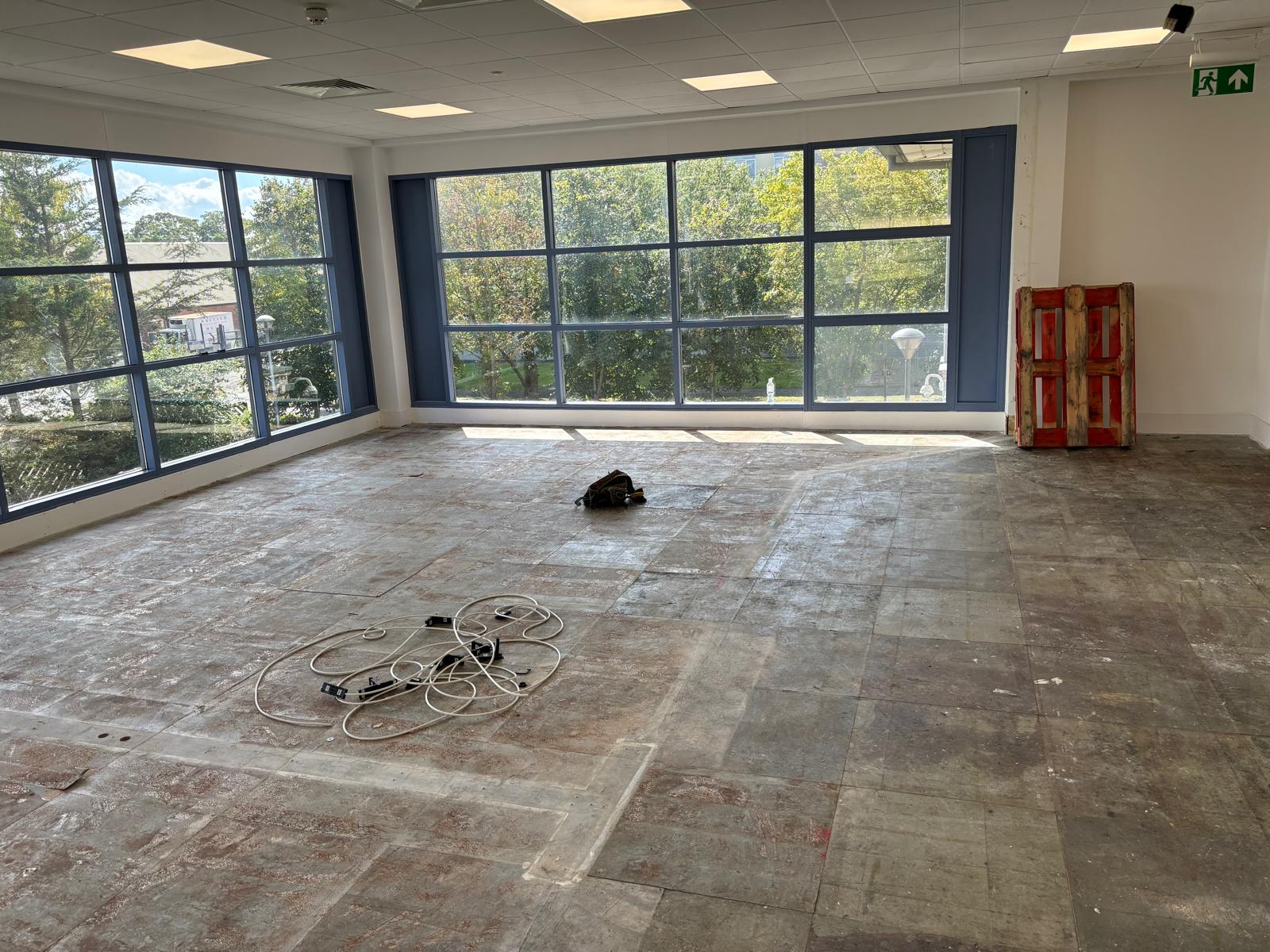
Benchmark costs by type of strip
These are UK-wide indicative ranges per square metre, covering labour, plant, skip hire and standard non-hazardous waste disposal. They do not include asbestos removal, which is always priced separately. Treat these as a sense check for a quote, not a quote in themselves.
What is usually included in a strip out quote
Before comparing prices, make sure you are comparing the same scope. A typical quote covers:
- Site setup including welfare facilities, protection to retained finishes and access routes
- Labour for the removal works themselves
- Plant and tools required for the specific scope
- Skip hire or grab lorry hire for waste removal
- Waste disposal at a licensed facility, with segregation of recyclable material streams
- Waste Transfer Notes as legal evidence of proper disposal
- A basic sweep clean on completion
What is often not included, and needs to be checked line by line:
- Asbestos survey and any asbestos removal identified by it
- Making good after removal, such as patching walls or floors
- Redecoration
- Isolation and disconnection of live utilities by a qualified engineer
- Out of hours working premiums if required by the building
- Fire stopping reinstatement on disturbed service penetrations
- Specialist decommissioning, such as commercial kitchen extraction or server room equipment
The variables that move the price
These are the factors that explain why two buildings of similar size can come out at very different prices, roughly in order of how much they typically move the number.
Asbestos
The single biggest variable by far. A clean survey adds nothing to the cost beyond the survey fee itself. Licensed asbestos removal can add tens of thousands of pounds depending on the material, its condition and how much of it there is.
Biggest driverAccess
Ground floor with a loading bay and vehicle access is the cheapest scenario. Upper floors served by a small passenger lift only, restricted street access, or a city centre site with no skip space all add cost through slower waste removal and more handling.
Adds 15 to 40%Working hours
Standard daytime working is the baseline. Out of hours or weekend only working, common in managed buildings, shopping centres and live healthcare sites, extends the programme and increases labour rates for unsociable hours.
Adds 20 to 60%M&E complexity
Basic lighting and power strips out quickly. Dense M&E including comms rooms, specialist ventilation, chilled beams, sprinkler systems or process equipment takes longer to isolate, disconnect and remove safely, and often needs specialist subcontractors.
Adds 10 to 30%Waste volume and type
A building with dense partitioning, raised floors and heavy ceiling systems generates far more waste per square metre than an open plan unit. Mixed waste that cannot be segregated on site costs more to dispose of than clean, sorted material streams.
Adds 10 to 25%Protection requirements
Working in an occupied building or one with retained finishes that must survive undamaged means slower, more careful work and more protective measures. This is common on CAT A strip outs where the landlord's base build has to stay intact.
Adds 15 to 35%Programme pressure
A tight deadline sometimes means a bigger team working in parallel, which costs more per day even if the total programme shortens. Rushed jobs are rarely the cheapest option even though they feel that way when you are trying to save time.
Adds 10 to 20%Building type
Retail units in managed centres, healthcare facilities and listed buildings all carry additional compliance, protection or working restrictions on top of the base strip out cost, regardless of the actual floor area involved.
Varies by sectorCosts by building type
Type of building matters as much as size. Two projects of the same square footage can sit at opposite ends of the range depending on what they are.
| Building type | Typical range | What pushes it up |
|---|---|---|
| Office, CAT A strip | £20 to £50 per m2 | Raised floor and ceiling protection, dense M&E, central London access restrictions. |
| Office, full strip to shell | £40 to £90 per m2 | Multi floor buildings, structural elements, lift only access on upper floors. |
| Retail unit | £25 to £60 per m2 | Shopping centre restricted hours, service yard access windows, security escort requirements. |
| Warehouse or industrial | £10 to £35 per m2 | Lower per m2 due to scale, but machinery decommissioning and contaminated flooring add significant fixed costs. |
| Restaurant or commercial kitchen | £40 to £100 per m2 | Grease extraction removal, gas isolation, drainage work. Small footprint but specialist heavy. |
| Healthcare, live environment | Highly variable, often 20 to 50% above standard rates | Infection control containment, negative pressure setup, out of hours only working. |
How to actually compare two quotes
The single most useful thing you can do before accepting any quote is put it through the same checklist as every other quote you have received. This is how to do it properly.
Ask each contractor to list exactly what is being removed, item by item. A quote that says strip out and one that lists partitions, ceilings, raised floor and M&E separately are not automatically pricing the same job.
Ask explicitly whether asbestos survey, asbestos removal, making good and redecoration are included or excluded. A cheaper quote that excludes all of these is not actually cheaper once you add them back in.
Ask for confirmation that the contractor is a registered waste carrier and that Waste Transfer Notes will be provided. Unusually cheap quotes sometimes cut corners here, and liability for illegally disposed waste can fall back on the building owner.
Find out what happens if asbestos is found during the works, or if the scope changes once the team is on site. A fixed price quote with no clarity on variations can turn into an uncontrolled cost once work starts.
Public liability insurance, CHAS or Constructionline accreditation, and CDM Principal Contractor capability if the project needs it. These do not show up in the price but they matter if something goes wrong.
A lower price with a longer programme, or one that does not account for surveys and notifications, can end up costing more overall through delay, especially where you are working to a lease end date or fit out contractor handover.
Why the cheapest quote is often not the cheapest project
This is worth saying plainly. A quote that comes in significantly below every other quote you have received is not necessarily a good deal. It usually means one of a small number of things: the scope has been priced narrower than the others, waste disposal is being handled informally rather than through a licensed route, the day rate assumes a smaller team than the job actually needs, or asbestos and making good have simply been left out on the assumption you will not notice until later.
None of these save you money. They shift cost to a later point in the project, where it arrives as a variation, a delay, or in the worst case a liability that lands on you rather than the contractor. The way to protect yourself is not to always pick the most expensive quote either. It is to make every quote answer the same questions before you compare the numbers.
Questions we get asked a lot
The key points
There is no fixed price per square metre for a strip out because there is no such thing as a standard strip out. The type of strip, the building, access, working hours and what is found once work starts all move the number independently. Benchmark ranges are useful for a sense check, not for budgeting a specific project.
- Get the asbestos survey done before finalising any budget
- Ask every contractor to itemise the quote rather than give one lump figure
- Check what is excluded as carefully as what is included
- Confirm waste disposal is licensed and Waste Transfer Notes will be provided
- Treat an unusually low quote as a reason to ask more questions, not fewer
- Compare programme alongside price, not price on its own
Recent Blogs
- The Complete Guide to Commercial Strip Out Projects in the UK
- Who Is Responsible If Something Goes Wrong During a Strip Out?
- Strip Out Costs: What Actually Drives the Price and Why Quotes Vary So Much
- CAT A vs CAT B: What They Mean and Why It Matters for Your Strip Out
- How Long Does a Strip Out Take?